The public’s trust in charities has fallen by 10 percentage points in the last year, new research suggests.
They now appear seventh in a newly published list of the most trusted institutions, coming behind the Royal Family and small businesses for the first time.
The research also reveals what people say charities can do to reassure them, including reviewing costs annually and regulation by the Charity Commission.
The poll of 1000 people, carried out by research consultancy nfpSynergy, shows that 56% of people now trust charities ‘quite a lot’ or ‘a great deal, a significant fall from last year and the sector’s second lowest figure since 2007. The Scouts and Guides continue their high levels of trust with 64%, while The Armed Forces continue to top the poll, despite a drop of 8%.
Political parties (12%) and government (20%) came bottom of the poll, while just 28% of people said they trusted the Fundraising Standards Board and the same number had never heard of it.
The survey, nationally representative of British adults, also asked people to choose which statements would reassure them about making a donation or convince them a charity was doing a good job.
The results showed the Charity Commission has a huge role to play, with 70% picking ‘every new charity has to be scrutinised before approval’ and 67% wanting to see ‘every charity’s accounts on the Charity Commission’s website’. Keeping an eye on the pennies was also deemed important, with 68% wanting to see an annual review of a charity’s costs to keep them low.
Around 60% of people wanted to see charities both chased to submit their accounts on time and forced to declare how many staff are paid over £60,000.
nfpSynergy’s Driver of Ideas, Joe Saxton, said: “Our research shows that trust in charities is highly volatile and can never be taken for granted.
"Having seen a rise in trust in 2012 and 2013, it has fallen from 66% to 56% this year.
"That’s the bad news and it’s hard not to wonder whether the revelations over CEO pay and some of the stories about alleged donations to terror groups in Syria have played their part.
"The good news is that our research shows that there are ways that every charity can reassure people that a donation is well spent.
"It’s clear that the role of the Charity Commission is absolutely central in building trust in charities.
"Charities need to scream and shout about how they are regulated as it’s a practical way that charities can try and boost their trust levels.”
The findings showed:
Public trust in charities has fallen for the first time since 2011.
56% of people now trust charities ‘quite a lot’ or ‘a great deal’, compared to 66% in 2013
Charities drop to 7th in the list as they’re overtaken by schools, small businesses and the Royal Family
Armed Forces remain top with 70% despite a fall of 8%, while Scouts and Guides remain in the top three on 64%
Political parties are still bottom on 12%, with 51% trusting them very little
Only a quarter trust the Fundraising Standards Board, while 28% have never heard of it
People were also asked which statements a charity could make that would reassure them about making a donation or would convince them the charity was doing a good job
70% chose ‘every new charity has to be scrutinised by the Charity Commission before it is approved’ and 68% selected ‘every charity’s accounts are on the Charity Commission website’
68% opted for charities reviewing their costs every year to keep them low


Latest News
-
CRUK fundraiser takes place this week following far right rally postponement
-
Age UK call centre workers balloted for strike action amid pay dispute
-
Charity boss ‘overwhelmed’ after emergency fundraiser exceeds target
-
National Trust pauses TikTok ads after AI ‘error’
-
City & Guilds scraps permanent chief hire at the 11th hour
-
Education charity fails to file accounts for last three financial years





Beyond the funding squeeze: Using equities to secure your charity’s future
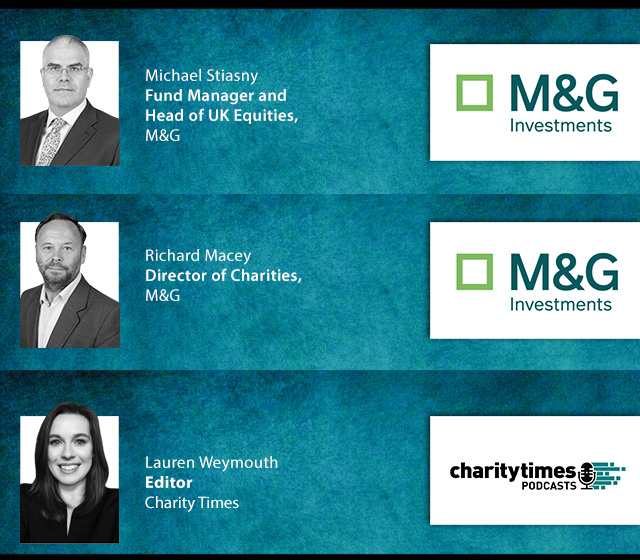
With charities facing increasing financial pressure and traditional income streams under strain, making investments work harder has never been more important. M&G’s Richard Macey and Michael Stiasny join Charity Times to discuss why equities remain a vital long-term asset class for charities, how organisations can balance income generation and growth, and the opportunities the current market environment may offer to help strengthen financial resilience.
Charity Times Awards 2023
Charity Times video Q&A: In conversation with Hilda Hayo, CEO of Dementia UK
Charity Times editor, Lauren Weymouth, is joined by Dementia UK CEO, Hilda Hayo to discuss why the charity receives such high workplace satisfaction results, what a positive working culture looks like and the importance of lived experience among staff. The pair talk about challenges facing the charity, the impact felt by the pandemic and how it's striving to overcome obstacles and continue to be a highly impactful organisation for anybody affected by dementia.




© 2021 Perspective Publishing Privacy & Cookies
Recent Stories