The annual CFDG and Hays Salary and Employment Survey, with more than 25% of CFDG members taking part, gives a detailed picture of the impact of the recession on the sector.
David Membrey, acting chief executive of CFDG, said: "The results of the survey show that the sector's response to the recession has had an impact on salaries, recruitment and staffing levels in 2009, as well as on hiring policies and pay reviews going forward through 2010."
However staff turnover rates have dropped with just under two thirds of respondents stating that they had no turnover at all.
Similarly, retention of staff with specific skills is not a concern to the sector, and the calibre of applicants in finance and accounting positions has greatly improved; although many respondents are concerned that once the economy picks up there may be an exodus back to the private sector.
The trend for benefits continues, with generous holiday entitlement remaining the most commonly offered benefit of working in the charity sector.
The next most prevalent is a defined contribution pension at 76%, which has risen from 66% in 2008.
David Membrey added that he is "pleased to see so many charities bringing in pension provision for all staff in the run-up to the changes in pension legislation that will be brought in after 2012."
For the first time CFDG polled respondents on the gender profile of their finance team.
The survey found that across the sector there is a gender balance with 52% male, and 48% female.
However, female respondents are, overall, less happy with their work-life balance, with only 44% rating it as above average.
For the full survey go here: http://www.cfdg.org.uk/cfdg/files/policy/Policy_CFDG_Hays_Salary_Survey.pdf?dm_i=5X9,4GER,NBNP8,DU3U,1


Latest News
-
Nine in ten charities using AI but few exploring its ‘true potential’, warns research
-
Evaluation reveals benefits of adding a virtual candle to online fundraising
-
Former Scope CEO to chair business group set up to tackle disability exclusion
-
Senior MP’s comparison of charity retail with vape shops criticised as 'outdated'
-
Working Families closes following ‘a sustained period of financial challenge’
-
Case study: How charities can best protect their storytellers





Charity Times video Q&A: In conversation with Hilda Hayo, CEO of Dementia UK
Charity Times editor, Lauren Weymouth, is joined by Dementia UK CEO, Hilda Hayo to discuss why the charity receives such high workplace satisfaction results, what a positive working culture looks like and the importance of lived experience among staff. The pair talk about challenges facing the charity, the impact felt by the pandemic and how it's striving to overcome obstacles and continue to be a highly impactful organisation for anybody affected by dementia.
Charity Times Awards 2023
Mitigating risk and reducing claims
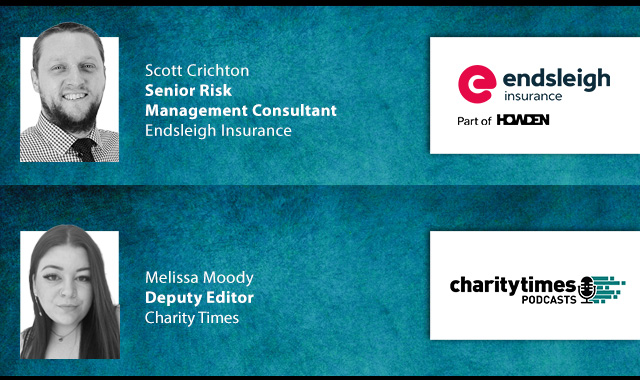
The cost-of-living crisis is impacting charities in a number of ways, including the risks they take. Endsleigh Insurance’s* senior risk management consultant Scott Crichton joins Charity Times to discuss the ramifications of prioritising certain types of risk over others, the financial implications risk can have if not managed properly, and tips for charities to help manage those risks.
* Coming soon… Howden, the new name for Endsleigh.
* Coming soon… Howden, the new name for Endsleigh.
Better Society





© 2021 Perspective Publishing Privacy & Cookies
Recent Stories