One in three British adults (37%) has not heard of the government’s proposal for a ‘Big Society’, according to new research from YouGov.
Big Society was a key element of David Cameron’s manifesto in the run up to the general election, highlighting his vision of community work and social enterprise
The scheme was officially launched on May 18 by the Prime Minister, encouraging people to become involved in their local communities and public services, however over half (53%) have no or very little knowledge of the proposals.
The Big Society is the name for a collection of proposals that include allowing community groups and charities to run local services, establishing a ‘Big Society Bank’ which would use money from unclaimed bank accounts to fund community activities and a Nation Citizen Service to encourage 16 year olds to help out in their communities.
When this was explained to respondents, there is a groundswell of support with 44% being in favour of it and only 16% against.
Commenting on the findings, Dr Michael Wagstaff, head of public sector research at YouGov, said “The Big Society idea proved difficult to get across on the doorstep during the election. The survey shows that there is still some way to go before the majority understand what it actually is. However, if the Coalition can get the message across then people are generally supportive of it.”
The Big Society proposals also call for an annual ‘Big Society Day’ to celebrate neighbourhood groups and 37% of respondents support the initiative.
This idea is most supported in the East of England, with 45% of respondents from this region lending their support.
The scheme is less popular in Wales and Scotland, with 33% and 36% respectively supporting a neighbourhood day.


Latest News
-
Evaluation reveals benefits of adding a virtual candle to online fundraising
-
Former Scope CEO to chair business group set up to tackle disability exclusion
-
Senior MP’s comparison of charity retail with vape shops criticised as 'outdated'
-
Working Families closes following ‘a sustained period of financial challenge’
-
Case study: How charities can best protect their storytellers
-
British Heart Foundation to close almost one in four of its charity shops





Charity Times video Q&A: In conversation with Hilda Hayo, CEO of Dementia UK
Charity Times editor, Lauren Weymouth, is joined by Dementia UK CEO, Hilda Hayo to discuss why the charity receives such high workplace satisfaction results, what a positive working culture looks like and the importance of lived experience among staff. The pair talk about challenges facing the charity, the impact felt by the pandemic and how it's striving to overcome obstacles and continue to be a highly impactful organisation for anybody affected by dementia.
Charity Times Awards 2023
Mitigating risk and reducing claims
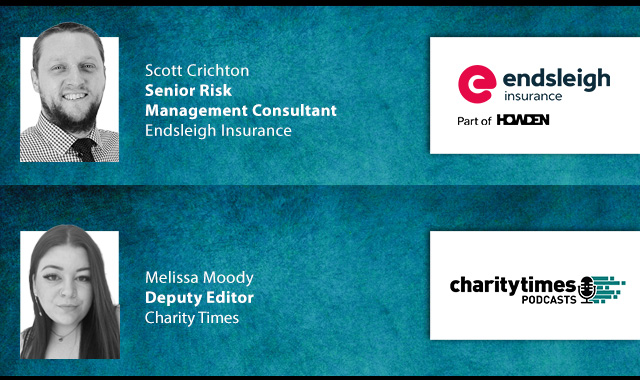
The cost-of-living crisis is impacting charities in a number of ways, including the risks they take. Endsleigh Insurance’s* senior risk management consultant Scott Crichton joins Charity Times to discuss the ramifications of prioritising certain types of risk over others, the financial implications risk can have if not managed properly, and tips for charities to help manage those risks.
* Coming soon… Howden, the new name for Endsleigh.
* Coming soon… Howden, the new name for Endsleigh.
Better Society





© 2021 Perspective Publishing Privacy & Cookies
Recent Stories