David Cameron’s ‘Big Society’ is an "intellectually flawed pipe dream" for a 1950s Britain, says Unite, the largest union in the country.
Unite, which has 60,000 members in the Not for Profit sector, said that the Prime Minister’s revival of his ‘Big Society’ pipe dream failed to answer two vital questions.
One, who is going to do all the volunteering when men and women now both have to work to pay the household bills and the increased taxes that the coalition government is imposing?
Two, where is the cash coming from when the contracts that charities bid for and third sector money are being slashed, such as the case of the leading legal agency for asylum seekers - Refugee and Migrant Justice (RMJ) - which collapsed last month due to cash flow problems?
Rachael Maskell, national officer, community and Not for Profit Sector, said: "David Cameron’s ‘Big Society’ is an intellectually flawed creed that harks back to a vision of 1950s Britain that never existed. We have been down this road before when John Major had a similar pipe dream of an idyllic Britain of 60 years ago.
"There is a hypocrisy here. The voluntary sector is being hit by massive cuts to its funding – for example, Croydon council has slashed 70% of its voluntary sector budget.
"And the coalition’s rampant drive for greater competition – heralded by the NHS White Paper last week – will drive down costs even more, especially as the ‘Big Society’ welcomes private sector interventions.
"This will mean that quality is compromised for cheapness. This culture either destroys services in organisations willing to compromise or stops them winning bids."
And Maskell added that volunteering is not a replacement for jobs. "Charities still need professional skills and good managers. And if we want the sector to add quality then well-trained professionals need to do this.
"The ‘Big Society’ is smoke and mirrors for an avalanche of privatisation under the Tories."


Latest News
-
Charity brands with 'momentum' among the public revealed
-
Regulators issue transparency plea to the public when fundraising
-
Two in three Brits feel ‘overwhelmed by the number of charity appeals’, survey finds
-
Charities retreating into ‘protection mode’ amid online hostility, warns NCVO
-
Regulator considering MP’s claim 32 charities ‘funnelled' £28m to illegal Israeli settlements
-
Code breaches found following investigation into ‘extremely aggressive’ fundraiser





Charity Times video Q&A: In conversation with Hilda Hayo, CEO of Dementia UK
Charity Times editor, Lauren Weymouth, is joined by Dementia UK CEO, Hilda Hayo to discuss why the charity receives such high workplace satisfaction results, what a positive working culture looks like and the importance of lived experience among staff. The pair talk about challenges facing the charity, the impact felt by the pandemic and how it's striving to overcome obstacles and continue to be a highly impactful organisation for anybody affected by dementia.
Charity Times Awards 2023
Mitigating risk and reducing claims
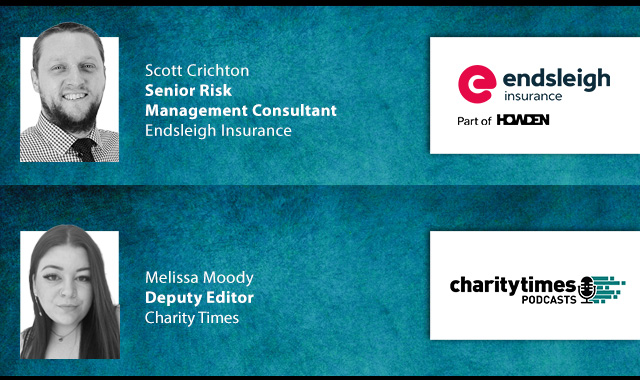
The cost-of-living crisis is impacting charities in a number of ways, including the risks they take. Endsleigh Insurance’s* senior risk management consultant Scott Crichton joins Charity Times to discuss the ramifications of prioritising certain types of risk over others, the financial implications risk can have if not managed properly, and tips for charities to help manage those risks.
* Coming soon… Howden, the new name for Endsleigh.
* Coming soon… Howden, the new name for Endsleigh.
Better Society





© 2021 Perspective Publishing Privacy & Cookies
Recent Stories