The Battle Against Cancer Investment Trust (Bacit) is aiming to raise £500 million by floating on the London Stock Exchange and generate millions each year for research into cancer treatments.
The fund will waive fees to investors. BACIT founder Tom Henderson, formerly of Cazenove, whose father was the former chairman of the ICR and London’s Royal Marsden Hospital, said: "For many years I have wanted to combine my background in fund management with supporting the incredible work of the Institute of Cancer Research."
The fund is backed by City financiers such as private equity veteran Jon Moulton, the founder of Alchemy Partners, who will sit on the BACIT board.
It will also include Moore Capital’s Greg Coffey, and Jamie Ritblat, of the UK’s property dynasty.
Investors will be able to buy shares in Bacit, which will allocate the proceeds with 28 fund managers including BlackRock, Polygon, Permira, Delancey, Majedie, Armajaro and Henderson.
Backers highlight the fund is targeting good returns for shareholders, which will help charitable donations on an annual basis.
The fund aims to make investors returns of between annual 10 and 15 per cent.
The absence in fees will offer investors an advantage over other funds.
Half of all the proceeds will automatically go to the Institute of Cancer Research, one of the world’s leading cancer drug laboratories, and the remainder will be allocated to charities chosen from a list by shareholders themselves.
While often significant, philanthropic generosity from London’s financiers has largely failed to overturn negative public perceptions of the City since the financial crisis.
While Bacit may help soften some attitudes, the fund’s backers insist public relations is not the motivation.
Henderson added: “The beauty of what this will do is that it will provide a recurring, perpetual income. It will allow the Institute of Cancer Research to plan.”
Alan Ashworth, chief executive of the Institute of Cancer Research, said: “We have discovered more genes that are at risk of cancer than any other organisation in the world, but we are severely limited at the moment by money in what we can develop.”
BACIT, is being advised by JP Morgan, who said it is prepared to list 500 million shares, depending on the amount of interest.

Latest News
-
Most charities do not have a 'kill switch' policy to tackle malfunctioning AI
-
UK's largest firms halve proportion of profits they give to charity
-
Almost two thirds of the public asked to donate over last month, new fundraising tracker shows
-
Monday movers – 14 September 2026
-
Exclusive: Lack of progress on diversity continues to blight leadership opportunities
-
RNLI chief condemns ‘wholly unacceptable’ abuse of staff





Beyond the funding squeeze: Using equities to secure your charity’s future
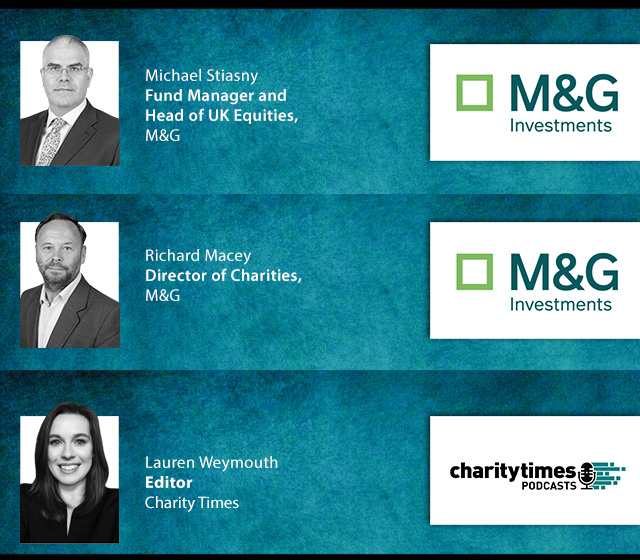
With charities facing increasing financial pressure and traditional income streams under strain, making investments work harder has never been more important. M&G’s Richard Macey and Michael Stiasny join Charity Times to discuss why equities remain a vital long-term asset class for charities, how organisations can balance income generation and growth, and the opportunities the current market environment may offer to help strengthen financial resilience.
Charity Times Awards 2023
Charity Times video Q&A: In conversation with Hilda Hayo, CEO of Dementia UK
Charity Times editor, Lauren Weymouth, is joined by Dementia UK CEO, Hilda Hayo to discuss why the charity receives such high workplace satisfaction results, what a positive working culture looks like and the importance of lived experience among staff. The pair talk about challenges facing the charity, the impact felt by the pandemic and how it's striving to overcome obstacles and continue to be a highly impactful organisation for anybody affected by dementia.





© 2021 Perspective Publishing Privacy & Cookies
Recent Stories