Triodos Bank and Greater Merseyside Connexions Partnership (GMCP) have won a £4.5m DWP Innovation Fund payment by results contract to help support young people in Merseyside who may be unemployed or at risk of unemployment.
Triodos Bank and GMCP are working together to deliver a three-year programme called “New Horizons” targeted at some of the most vulnerable young people in the Merseyside area.
The programme aims to improve educational, training and ultimately employment outcomes for 3,900 young people, many of whom will be young offenders, have learning disabilities, or be in or leaving care.
It will use a blend of interventions including one-to-one coaching aimed at improving ‘mental toughness’ and resilience in individuals so that they can self-sustain their own development and progression into suitable employment.
The Innovation Fund is a newly launched DWP initiative aimed at encouraging social service delivery organisations, financial intermediaries and private sector investors to work together to design and finance programmes which can help improve employment outcomes for the most vulnerable young people in society.
The DWP acts as main contractor and guarantor of a payment by results contract.
Unlike typical social service delivery, the funding is provided at risk by private sector social investors, who only achieve a financial return if pre-agreed educational, training and employment outcomes are met.
Triodos Bank’s corporate finance team acted as lead adviser on the deal and in partnership with GMCP raised £2 million of funding for the programme in the form of a Social Impact Bond from a syndicate of leading UK social investors, including the Big Society Investment Fund.
GMCP, who are a leading and longstanding social delivery organisation in Merseyside designed the New Horizons concept and will be in charge of delivering the programme on the ground in partnership with a small group of other local service providers.
Triodos will retain a role in the financial management of the three year scheme on behalf of investors.
Minister for Employment, Chris Grayling commented, “The first round of Innovation Fund contracts we have awarded should offer a win-win solution, whereby private sector funding will allow us to test out innovative social programmes which are targeted at the most vulnerable.
"We’re delighted to see ethical financiers like Triodos working in partnership with credible delivery organisations like GMCP to have the greatest impact on communities in Merseyside."
Dan Hird, head of corporate finance at Triodos, added: “This has been a ground-breaking and well organised initiative by DWP as the scheme offers good value for money for the taxpayer because Government will only pay out if positive outcomes are actually achieved.
"It has been great for us to work with a highly professional service delivery partner in GMCP who can significantly help to transform the lives of thousands of young people. There is a genuine opportunity now for Social Impact Bonds to become more widely used financial instruments in addressing social problems at a meaningful scale”.
Kieran Gordon, CEO of GMCP, added: “We welcome this government support for social investment to tackle the growing problem of youth unemployment. Triodos Bank and GMCP have worked hard to attract substantial private investment from a range of investors to enable us to respond to the rising unemployment amongst local young people.
"This will bring new investment capital into Greater Merseyside which would not otherwise have come to the area. We are delighted to work with a range of investors who pledged their support to this programme."


Latest News
-
Arts venue charity to close after ‘exhausting all possible alternatives’
-
Hospice charity repeatedly targeted by criminals launches appeal to improve security
-
Children’s charity refreshes brand to be clearer ‘about who it is’
-
Monday movers – 12 October 2026
-
Council terminates charity’s £8.57m children's care home contract early amid staffing concerns
-
Charity boss shows her 'vulnerability' as she posts emotional grant rejection video





Beyond the funding squeeze: Using equities to secure your charity’s future
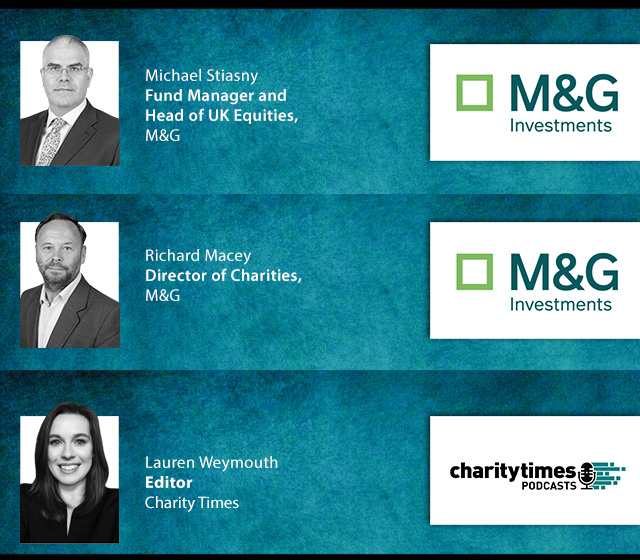
With charities facing increasing financial pressure and traditional income streams under strain, making investments work harder has never been more important. M&G’s Richard Macey and Michael Stiasny join Charity Times to discuss why equities remain a vital long-term asset class for charities, how organisations can balance income generation and growth, and the opportunities the current market environment may offer to help strengthen financial resilience.
Charity Times Awards 2023
Charity Times video Q&A: In conversation with Hilda Hayo, CEO of Dementia UK
Charity Times editor, Lauren Weymouth, is joined by Dementia UK CEO, Hilda Hayo to discuss why the charity receives such high workplace satisfaction results, what a positive working culture looks like and the importance of lived experience among staff. The pair talk about challenges facing the charity, the impact felt by the pandemic and how it's striving to overcome obstacles and continue to be a highly impactful organisation for anybody affected by dementia.




© 2021 Perspective Publishing Privacy & Cookies
Recent Stories