Lord Hodgson of Astley Abbotts will lead a new cutting red-tape taskforce to flush out burdens on the voluntary sector Nick Hurd, minister for Civil Society, and Mark Prisk, minister for Business and Enterprise have announced.
The Government says it is committed to making it easier to run charities, voluntary groups and social enterprises.
Reducing bureaucratic burdens will free-up time and resources for these organisations to make a difference in their communities and help mobilise the Big Society.
Minister for Civil Society, Nick Hurd, said: "This is a tough time for small civil society organisations and we want to make life easier for them. So I have asked for specific ideas on how we can thin the thicket of bureaucracy and regulation that too often gets in the way.
"I see it very simply. Every pound or hour we can save a small voluntary organisation is a pound or hour that could be better spent."
The taskforce will have a particular remit to consider the full range of burdens that fall on small civil society organisations.
It will make recommendations about how red-tape should be reduced, including changes to legislation or processes that are needed.
The taskforce will decide which particular areas it will focus on, but this might include: responsibilities of trustees and directors, employment law and contractual arrangements when civil society organisations provide public services.
Lord Hodgson, who has spent his career advising and working for SMEs, is currently President of the National Council for Voluntary Organisations (NCVO) and as shadow minister in the House of Lords, led for the Conservative Party on the proceedings of the Charities Act 2006.
He will be joined on the taskforce by: Andrew Hind, retiring chief executive of the Charity Commission; Lynne Berry, chief executive WRVS, David Tyler, chief executive Community Matters, Sir Graham Melmoth, retiring chair NCVO and past chief executive Co-operative Group and David Thompson, Chair of Marstons PLC.
Minister for Business and Enterprise, Mark Prisk, said: “We need to swing the balance back in favour of entrepreneurial spirit. We want to make sure that charities spend more time on their valuable work to support our communities.
“This taskforce will build on previous research into burdens on small business to look at how we can encourage more people to work together to improve their communities and help one another. Lord Hodgson has assembled a very strong team and I look forward to their recommendations.”
Lord Hodgson, the chair of the Big Society De-regulation Taskforce, added:“I have accepted this role because I believe that the Government is serious about cutting the burden of red tape for civil society groups.
"I relish this opportunity to try to thin out the red tape that puts people off doing more for their communities and that holds back innovative small organisations from growth. I’m very grateful to the taskforce members who have volunteered the benefit of their significant expertise to this important work.
"I hope very much that the sector will not be backward in coming forward to identify areas where bureaucracy can be reduced and make practical recommendations for action – this is their chance.”
Apart from making its own recommendations, the taskforce will also work with other initiatives, such as Lord Young's Health and Safety review, to help ensure that cuts to red tape are made in ways that are properly joined up and will consider or feed into related work, including:
HM Treasury and HM Revenue and Customs review of bureaucracy associated with Gift Aid; and Home Office work on the criminal records and vetting and barring regime.


Latest News
-
Criticism of senior MP’s 'outdated' comparison of charity retail with ‘vape shops’
-
Working Families closes following ‘a sustained period of financial challenge’
-
Case study: How charities can best protect their storytellers
-
British Heart Foundation to close almost one in four of its charity shops
-
Monday movers - 8 June
-
Jobs at risk as RSPB looks to cut operating costs by 7%





Charity Times video Q&A: In conversation with Hilda Hayo, CEO of Dementia UK
Charity Times editor, Lauren Weymouth, is joined by Dementia UK CEO, Hilda Hayo to discuss why the charity receives such high workplace satisfaction results, what a positive working culture looks like and the importance of lived experience among staff. The pair talk about challenges facing the charity, the impact felt by the pandemic and how it's striving to overcome obstacles and continue to be a highly impactful organisation for anybody affected by dementia.
Charity Times Awards 2023
Mitigating risk and reducing claims
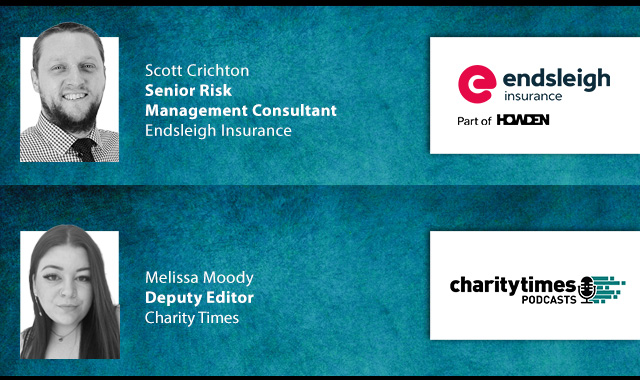
The cost-of-living crisis is impacting charities in a number of ways, including the risks they take. Endsleigh Insurance’s* senior risk management consultant Scott Crichton joins Charity Times to discuss the ramifications of prioritising certain types of risk over others, the financial implications risk can have if not managed properly, and tips for charities to help manage those risks.
* Coming soon… Howden, the new name for Endsleigh.
* Coming soon… Howden, the new name for Endsleigh.
Better Society




© 2021 Perspective Publishing Privacy & Cookies
Recent Stories