Seventy five per cent of charities say they measure the impact of their work, according to a new report released by NPC.
Nearly three quarters (74 per cent) of these have invested more in measuring results over the last five years.
The charity think tank and consultancy, which this week launched its new brand and website, has produced Making an impact, the first representative study of impact measurement amongst UK charities.
The report finds that over half of respondents (52 per cent) measuring impact say they have increased their measurement efforts in order to meet funder requirements.
Only one in twenty (5 per cent) state service improvement as their main motivation.
Yet one in four (25 per cent) report improved services as the main perceived benefit of impact measurement.
The discrepancies between what motivates charities to measure impact and what they get from impact measurement reflects the widespread anecdotal evidence NPC has collected: that whilst charities might be initially reluctant to engage in impact measurement, they go on to find that they reap valuable and sometimes unexpected benefits from it.
Dan Corry, chief executive of NPC, said: "In the current financial climate, with ever-shrinking funding pots set against growing demand for services, it is important that charities make the resources they we have work harder and more effectively than ever.
"NPC’s impact survey shows that many charities have to be ‘forced’ to assess their impact, but having done so find it helps them to improve their services. There is still a long way to go in getting charities to embrace impact measurement wholeheartedly, rather than seeing it as a burden.
"We hope that this report and its findings will help both funders and charities to work together to turn impact measurement into an integral part of third sector activity."
The Outward Bound Trust is an educational charity which takes children on outdoor activity courses to learn teamwork and leadership skills.
The organisation was wary when it started looking into impact measurement five years ago, but evaluation is now at the heart of its strategic plan.
The Outward Bound Trust’s ead of Impact Evaluation Emma Ferris said: "As was our hope, our impact measurement work has really helped us showcase our results and strengthen our relationships with funders, but we’ve also got a lot more out of it too.
"For example, we are looking at some of the outcomes we have measured and using the information to influence how we develop our courses, and the results are having a knock-on effect on our strategy.
"We’ve also been able to feed back the findings to all our staff, which has brought the organisation together in seeing what it is we achieve, which has had a great effect on morale and boosted our confidence."
However whilst a great deal of progress has been made, Making an impact also identifies key challenges with impact measurement, notably:
A quarter of charities (25 per cent) say they do not measure their work at all. Small charities are less likely to measure impact than their larger counterparts: nearly half of charities with an income below £100,000 do not measure at all.
Funding is seen to be the greatest barrier. Nearly two thirds of funders (64 per cent) are not perceived to build evaluation support into their funding.


Latest News
-
Criticism of senior MP’s 'outdated' comparison of charity retail with ‘vape shops’
-
Working Families closes following ‘a sustained period of financial challenge’
-
Case study: How charities can best protect their storytellers
-
British Heart Foundation to close almost one in four of its charity shops
-
Monday movers - 8 June
-
Jobs at risk as RSPB looks to cut operating costs by 7%





Charity Times video Q&A: In conversation with Hilda Hayo, CEO of Dementia UK
Charity Times editor, Lauren Weymouth, is joined by Dementia UK CEO, Hilda Hayo to discuss why the charity receives such high workplace satisfaction results, what a positive working culture looks like and the importance of lived experience among staff. The pair talk about challenges facing the charity, the impact felt by the pandemic and how it's striving to overcome obstacles and continue to be a highly impactful organisation for anybody affected by dementia.
Charity Times Awards 2023
Mitigating risk and reducing claims
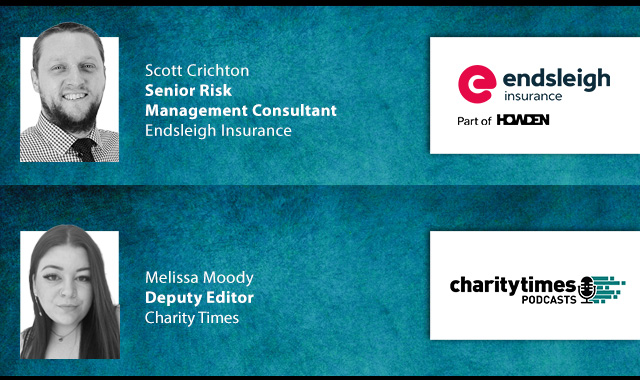
The cost-of-living crisis is impacting charities in a number of ways, including the risks they take. Endsleigh Insurance’s* senior risk management consultant Scott Crichton joins Charity Times to discuss the ramifications of prioritising certain types of risk over others, the financial implications risk can have if not managed properly, and tips for charities to help manage those risks.
* Coming soon… Howden, the new name for Endsleigh.
* Coming soon… Howden, the new name for Endsleigh.
Better Society





© 2021 Perspective Publishing Privacy & Cookies
Recent Stories