The Government is right to increase aid to fragile and conflict-affected states, such as Rwanda and the Democratic Republic of Congo (DRC), but it must be prepared to suspend or even cancel a programme if a Government flouts agreements or refuses to engage in efforts to increase transparency and accountability, MPs on the International Development Committee argue in a new report.
The Department for International Development (DFID) is increasing its focus on fragile states and will spend 30% of Official Development Assistance (ODA) - approximately £3,414 million - in these states by 2015.
DFID is investing £790 million in the Democratic Republic of Congo between 2010-15. There is a long history of mineral wealth being used to fund and perpetuate conflict and criminality in the DRC.
The Government of DRC has taken some measures to regulate the industry; however, it is clear that these remain insufficient.
The committee calls on DFID to set out clearly for the Government of the DRC what the UK expects in terms of transparency and accountability in the mineral sector and withdraw assistance if these expectations are not met.
The Government of DRC has continued to permit secret sales of assets and First Quantum has as yet had no redress.
The risks of not properly managing this sector are that development gains made elsewhere will be forgone.
The committee said DFID must set out clearly for the Government of the DRC what it expects in terms of transparency and accountability in the mineral sector and withdraw assistance if these expectations are not met. Kabila is putting the aid relationship at risk by signing secret mining deals and with allegations of election fraud.
Many of the fragile countries where DFID is increasing its funding achieved low scores on the Transparency International Perception of Corruption Index.
In countries where fraud and corruption are rife, it is not convincing to argue that DFID's programmes are unaffected, said the report.
Chair of the committee, Lib Dem MP Malcolm Bruce, said: "There are obvious benefits of providing aid to fragile states. It is, after all, cheaper to prevent conflicts, than to deal with wars and their aftermath.
"Nevertheless, there are considerable risks in spending aid money in conflict scarred states and the Government must be frank and open about this if it wants to convince the public that its approach is the right one, both morally and politically.
"In countries where fraud and corruption are rife , DFID will not always be able to mitigate against this adequately - especially where it sub-contracts delivery of its programmes to third parties.
"This means it may not be able to guarantee value for money for every pound it spends."
Recommendations
DFID already allocates a significant part of its assistance to improving governance in fragile and conflict-affected states.
However, the reports sets out a number of recommendations for improvement.
The MPs urge DFID to set out specific governance conditions under which it will provide direct budget support to fragile states, and any under which it will be withdrawn and apply these consistently.
They also recommend that DFID invest more in community-led local initiatives which respond to community priorities and give communities more confidence to hold their governments to account.
Case study: Rwanda
Rwanda is heavily dependent on aid which provides 45% of government expenditure.
The UK will provide £90 million to Rwanda in 2014-15. While Rwanda has made progress in reducing poverty, concerns have been expressed about its human rights record and the lack of political pluralism.
The committee urges the UK Government to use its position as the largest bilateral donor to Rwanda to insist on improvements to the country's governance.
The report recommends that DFID set out clear benchmarks for the period up to 2015 requiring improvements in areas such as freedom of speech and association.
For example, ensuring human rights organisations can operate without censure and improving freedom of the press.
Malcolm Bruce MP added: "Ministers should use the UK’s leverage as a major donor to encourage the Rwandan Government to increase political freedoms."
Case study: the Democratic Republic of Congo
The committee expressed concerns about high levels of violence against women and girls in the DRC. It says that DFID should give greater priority to tackling this in its programme and include the reduction of violence against women in its results framework for the DRC.
Bruce said: "DFID rightly focuses on women and girls in its programmes. In the DRC it should set up stand alone programmes for violence against women and girls including care for survivors and programmes promoting behavioural change. We want to see improved outcomes reflected in DFID’s results."
The UN peacekeeping force in the East, MONUSCO, has faced formidable challenges since it began operations in 1999. However the committee asks whether the mandate for the force is still appropriate. In particular it recommends a more mobile and agile force which can quickly respond to incidents and take a more proactive approach to apprehending perpetrators of violence.
Oxfam verdict
Max Lawson, head of public policy and advocacy, at Oxfam, said: "The Select Committee is right to raise the need to improve transparency and accountability of British government aid to fragile states - this is important for both the tax payer and the people living in those fragile states.
"Aid to fragile states will always face challenges. Some 40 per cent of world’s poorest people live in these conflict ravaged and fragile states. It would be wrong of us to turn our backs on them.”


Latest News
-
Criticism of senior MP’s 'outdated' comparison of charity retail with ‘vape shops’
-
Working Families closes following ‘a sustained period of financial challenge’
-
Case study: How charities can best protect their storytellers
-
British Heart Foundation to close almost one in four of its charity shops
-
Monday movers - 8 June
-
Jobs at risk as RSPB looks to cut operating costs by 7%





Charity Times video Q&A: In conversation with Hilda Hayo, CEO of Dementia UK
Charity Times editor, Lauren Weymouth, is joined by Dementia UK CEO, Hilda Hayo to discuss why the charity receives such high workplace satisfaction results, what a positive working culture looks like and the importance of lived experience among staff. The pair talk about challenges facing the charity, the impact felt by the pandemic and how it's striving to overcome obstacles and continue to be a highly impactful organisation for anybody affected by dementia.
Charity Times Awards 2023
Mitigating risk and reducing claims
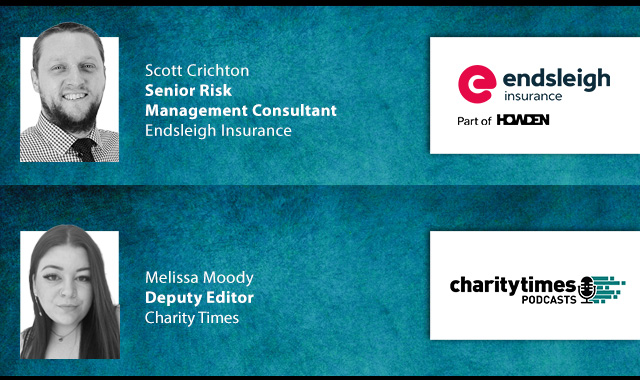
The cost-of-living crisis is impacting charities in a number of ways, including the risks they take. Endsleigh Insurance’s* senior risk management consultant Scott Crichton joins Charity Times to discuss the ramifications of prioritising certain types of risk over others, the financial implications risk can have if not managed properly, and tips for charities to help manage those risks.
* Coming soon… Howden, the new name for Endsleigh.
* Coming soon… Howden, the new name for Endsleigh.
Better Society




© 2021 Perspective Publishing Privacy & Cookies
Recent Stories