The Legacy10 campaign launched yesterday by Roland Rudd of financial PR firm Finsbury, with a speech by the Chancellor George Osborne, will provide a boost to legacy giving, says the Institute of Fundraising and Remember A Charity.
Aimed at the 3% of individuals who die each year and are Inheritance Tax payers, the campaign asks for charitable pledges worth 10% of peoples’ estates.
The campaign aims to see the number of people who give to charity in their wills increase.
Peter Lewis, chief executive of the Institute of Fundraising, commented: “This campaign incentivises those who are likely to have to pay IHT when they pass away to leave a legacy.
"Legacy10 raises the profile of legacy giving and ensures that many people will become aware of the option of leaving a charitable gift in their will. Making a generous, final gift to a favourite good cause can help you to leave the world a better place.”
Rob Cope, director of Remember A Charity, added: “Legacy10 is aimed at the top 3% of the population. However, it’s important to remember that leaving a legacy isn’t just something for the super rich – only a small minority of people will be affected by these new tax changes but everyone should consider leaving a charitable gift in their will, however modest it might be.
“It is worth remembering that if an extra 4% of people left a gift in their will to charity, a further £1 billion for good causes would be raised every year. The Remember A Charity website gives people the tools they need to research the causes they would most like to support, and discover how best to leave a legacy.”
Figures compiled by the Charities Aid Foundation (CAF) show that the amount of legacy income reported by the 11,000 biggest charities in their most recent annual returns is £2.1 billion.
This is a real terms increase of 3% on September 2010 but represents just 13.49% of all voluntary income received by these charities.
There are over 11,000 charities in England and Wales with an annual income of over £500k which report their legacy income in their annual returns to the Charity Commission.
Culture Secretary Jeremy Hunt added: "What's surprising is that only seven per cent of people ever leave money to a charity in their will. Including a gift to charity in a will is a great way to recognise an organisation that's been there for you during your life.
"It's also a brilliant way to help that charity become more financially secure and continue their work in the future."
Hunt has been active in promoting philanthropy among the business community, approaching FTSE 100 chief executives for meetings to get their organisations to invest in the arts
The Legacy10 campaign already has the support of sir Richard Branson, head of the Virgin empire, and Jacob Rothschild, banker and patriarch of the Rothschild family, who have both pledged to give away a portion of their fortunes.
Martyn Lewis, chair of the National Council for Voluntary Organisations, and Charles Dunstone, co-founder of Carphone Warehouse, are also among those giving their backing to the campaign.
Roland Rudd, founder and Chairman of Legacy10, added: “The goal of Legacy10 is to encourage a change in the way we in the UK regard legacy giving, and make it the norm for people to leave at least 10% of their wealth to good causes.
"I am encouraged that a number of people have already made the pledge including Sir Richard Branson, Paul Myners and Sir Keith Mills. I call on others to follow their lead. We have a great incentive in the Chancellor’s introduction this April of a cut in inheritance tax from 40% to 36% for those who give at least 10% of their estate to charity."


Latest News
-
Criticism of senior MP’s 'outdated' comparison of charity retail with ‘vape shops’
-
Working Families closes following ‘a sustained period of financial challenge’
-
Case study: How charities can best protect their storytellers
-
British Heart Foundation to close almost one in four of its charity shops
-
Monday movers - 8 June
-
Jobs at risk as RSPB looks to cut operating costs by 7%





Charity Times video Q&A: In conversation with Hilda Hayo, CEO of Dementia UK
Charity Times editor, Lauren Weymouth, is joined by Dementia UK CEO, Hilda Hayo to discuss why the charity receives such high workplace satisfaction results, what a positive working culture looks like and the importance of lived experience among staff. The pair talk about challenges facing the charity, the impact felt by the pandemic and how it's striving to overcome obstacles and continue to be a highly impactful organisation for anybody affected by dementia.
Charity Times Awards 2023
Mitigating risk and reducing claims
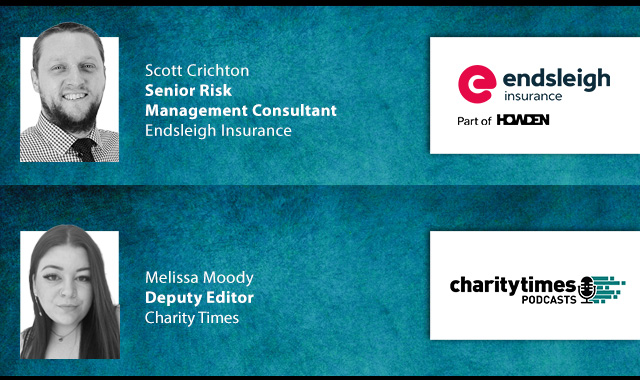
The cost-of-living crisis is impacting charities in a number of ways, including the risks they take. Endsleigh Insurance’s* senior risk management consultant Scott Crichton joins Charity Times to discuss the ramifications of prioritising certain types of risk over others, the financial implications risk can have if not managed properly, and tips for charities to help manage those risks.
* Coming soon… Howden, the new name for Endsleigh.
* Coming soon… Howden, the new name for Endsleigh.
Better Society




© 2021 Perspective Publishing Privacy & Cookies
Recent Stories