Private philanthropy is improving the lives of some of the world's poorest people, but the Department for International Development (DFID) must do more to engage private foundations in coordinated global efforts to improve the effectiveness of aid.
While private foundations make a huge contribution, concerns have been raised about the transparency and accountability, according to a new report by MPs on the International Development Committee.
Foundations should sign up to International Aid Transparency Initiative guidelines and be brought into global structures to ensure that they coordinate their work with other donors.
Malcolm Bruce MP, chair of the International Development Committee, said: "The world's largest aid giving foundation - the Bill & Melinda Gates Foundation - has shown that risk-taking and innovation can produce outstanding results. Incredibly Bill & Melinda Gates now spend more on health programmes than the UN World Health Organisation.
"Their foundation has made significant progress in reducing the impact of Malaria on developing countries and may yet succeed in eradicating the disease.
"While their efforts are to be welcomed, there is a danger that private foundations can by-pass civil society groups in developing countries and skew aid programmes in favour of big hi-tech single issue interventions. DFID should work with foundations to maximise their contribution and help them play a bigger part in global efforts to end poverty."
DFID currently engages with foundations on an ad-hoc basis and the report recommends a more systematic approach to the Department's relationship with private philanthropic organisations.
The committee recognises that DFID officials cannot meet all small foundations on a one-to-one basis, but it believes that the Department should make more efforts to engage with them.
A designated contact official for foundations should be established and a DFID minister should hold an annual meeting with groups of smaller foundations.
The Department should produce a publication indicating what DFID funding foundations might apply for, and how to apply.
DFID should include foundations as fully as possible in future development events and processes, including the High Level Forum on Aid Effectiveness; the forthcoming Rio + 20 UN conference on Sustainable Development; and discussions of a post-2015 Millennium Development Goal Framework.
Read the International Development Committee report here.


Latest News
-
Criticism of senior MP’s 'outdated' comparison of charity retail with ‘vape shops’
-
Working Families closes following ‘a sustained period of financial challenge’
-
Case study: How charities can best protect their storytellers
-
British Heart Foundation to close almost one in four of its charity shops
-
Monday movers - 8 June
-
Jobs at risk as RSPB looks to cut operating costs by 7%





Charity Times video Q&A: In conversation with Hilda Hayo, CEO of Dementia UK
Charity Times editor, Lauren Weymouth, is joined by Dementia UK CEO, Hilda Hayo to discuss why the charity receives such high workplace satisfaction results, what a positive working culture looks like and the importance of lived experience among staff. The pair talk about challenges facing the charity, the impact felt by the pandemic and how it's striving to overcome obstacles and continue to be a highly impactful organisation for anybody affected by dementia.
Charity Times Awards 2023
Mitigating risk and reducing claims
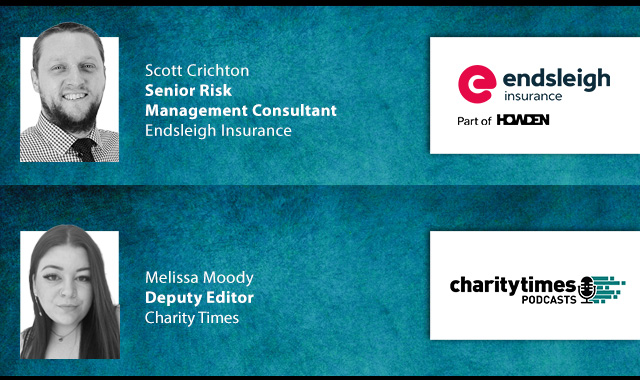
The cost-of-living crisis is impacting charities in a number of ways, including the risks they take. Endsleigh Insurance’s* senior risk management consultant Scott Crichton joins Charity Times to discuss the ramifications of prioritising certain types of risk over others, the financial implications risk can have if not managed properly, and tips for charities to help manage those risks.
* Coming soon… Howden, the new name for Endsleigh.
* Coming soon… Howden, the new name for Endsleigh.
Better Society




© 2021 Perspective Publishing Privacy & Cookies
Recent Stories