In a report published today, the Institute of Directors (IoD) argues that at least £25bn of annual efficiencies can be made in the public sector within three years through a radical restructuring of public sector procurement (£15bn saving) and greater use of shared services and outsourcing (£10bn saving).
The report cites the UK public sector procurement spend is £220bn a year, equating this to 0.75 per cent of global GDP; one third of Government expenditure, costing each person in the UK £3,500 on average a year.
This would equate to £14,000 for a typical family of 4.
Miles Templeman, IoD director-general, said: "The economic situation demands immediate action to reduce public expenditure through implementing the proposals in this paper. There is a lot of talk among politicians about the need to introduce efficiencies into the public sector, but very little detail on how this will be done. The report we publish today provides a vital needed blueprint."
Colin Cram, the report's author and leading public procurement specialist, said: "There has been much improvement in procurement under the leadership of the Office of Government Commerce.
"However, public sector procurement remains a legacy of its past and a prisoner of its structures. A step change is long overdue in the way public sector procurement is organised and managed. Its complexity does not excuse looking to the best private sector models, for example, companies like Tesco."
The problem, says the report, is that most public sector bodies are doing their own thing, highlighting the following:
• Despite some areas of excellence and good collaborative initiatives, the majority of public procurement spending is so fragmented that huge potential savings are being missed every year.
• This is because most of the public sector still organises itself on the "corner shop" model, with the majority of purchasing organised in small scale silos - that is local authorities, NHS trusts, small central Government departments, each doing their own thing.
The report then states the consequences are high costs are created through "massive" duplication; stating:
• Many public sector organisations use identical or similar products and services (legal services, IT, Human Resources). But are these being bought or sourced out centrally? "No".
• There is constant reinvention of the wheel. Instead of integrating their buying and outsourcing, hundreds of public sector organisations are each wading through a morass of contract terms and conditions, procedures, processes and interpretations of procurement law.
• This is unnecessary, and using examples of savings achieved already on specific projects, we believe at least £15bn in the procurement process and £10bn in the outsourcing process are conservative estimates of what can be saved.
• If multinational companies (the supermarkets and other big buyers) operated like the public sector, they would have gone out of business years ago.
The solution, says the report, is an integrated public sector procurement and outsourcing structure. Which means
• Centralised buying organisations that handle all key supplier relationships and all national and major contracts on behalf of the whole public sector
• Where there are regional and local requirements, we need regional procurement hubs to provide expert contracting support to all bodies in the region
• A single leadership point (the Office of Government Commerce) for the above structure
• Mandatory use of the above structures by all public sector bodies.
Templeman added: "There is much talk among politicians about the need to cut waste, but rarely any detail on how this will be achieved. Today's report provides a much needed blueprint. If politicians have the will, and commence the restructuring immediately, it could be completed within 12 months and deliver savings within three years."
To read the full report click here: http://www.iod.com/intershoproot/eCS/Store/en/pdfs/policy_article_towards_tesco.pdf


Latest News
-
British Heart Foundation to close almost one in four of its charity shops
-
Jobs at risk as RSPB looks to cut operating costs by 7%
-
Monday movers - 8 June
-
‘Lack of buy in’ from charity leaders hindering philanthropy, fundraising body warns
-
World’s wealthiest continue to be less generous than those in lower income countries
-
Seven in ten new regular donors recruited through face-to-face fundraising, survey finds





Charity Times video Q&A: In conversation with Hilda Hayo, CEO of Dementia UK
Charity Times editor, Lauren Weymouth, is joined by Dementia UK CEO, Hilda Hayo to discuss why the charity receives such high workplace satisfaction results, what a positive working culture looks like and the importance of lived experience among staff. The pair talk about challenges facing the charity, the impact felt by the pandemic and how it's striving to overcome obstacles and continue to be a highly impactful organisation for anybody affected by dementia.
Charity Times Awards 2023
Mitigating risk and reducing claims
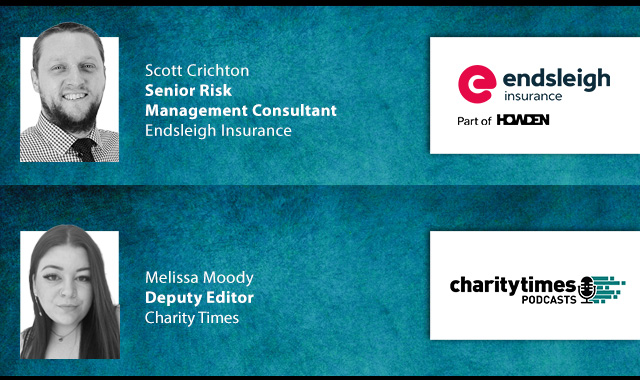
The cost-of-living crisis is impacting charities in a number of ways, including the risks they take. Endsleigh Insurance’s* senior risk management consultant Scott Crichton joins Charity Times to discuss the ramifications of prioritising certain types of risk over others, the financial implications risk can have if not managed properly, and tips for charities to help manage those risks.
* Coming soon… Howden, the new name for Endsleigh.
* Coming soon… Howden, the new name for Endsleigh.
Better Society




© 2021 Perspective Publishing Privacy & Cookies
Recent Stories