A year on from the Prime Minister’s launch of the Big Society programme an independent, cross party Commission are calling on Government to “fill in the blanks” on Big Society.
Powerful people, responsible society, the Commission’s final report launched today, embraces the Big Society as an agenda that “should transcend party politics” but criticises Government for failing to articulate a clear plan on Big Society, as research conducted by the Commission finds that only 13% of the public believe the Government has a clear plan for Big Society.
The Commission brought together politicians from across the political spectrum and civil society leaders including Lord Rennard, Nick Boles MP, Lord Boateng, the Bishop of London and charity CEOs such as Dame Clare Tickell.
The report urges the Prime Minister to seize the reins in driving forward the Big Society agenda, and calls for a sea change in the way banks engage with the UK’s communities.
The report:
• Urges the Prime Minister to take the reins, and more personal responsibility, in
driving forward the Big Society in Whitehall, as polling by the Commission finds only 13% of the public think the government has communicated a clear idea of what Big Society is about
• Says the Government “lacks a credible plan” to make big society work in deprived areas. Research by the Commission found nearly 60% of the public do not think big society will work as well in deprived communities
• Calls on banks to commit to reinvesting a minimum of 1% of pre tax profits for social good, and calls for a new regulatory framework to ensure banks lend to financially excluded communities (including a UK version of the American Community Reinvestment Act)
• Warns the Government risks alienating the very civil society leaders it will depend on to realise its vision, as research conducted by the Commission found that only 8% of voluntary sector leaders think the Government had a good understanding of the voluntary sector
• Warns that local council cuts risk undermining the Big Society, and calls on Whitehall to set more “rules of the road” for local authorities, as research by the Commission finds nearly 7 in 10 members of the public think councils should not be allowed to make disproportionate cuts to the voluntary sector
• Suggests plans for an extra ‘Big Society bank holiday’ be scrapped, and replaced with new rights for employees to request time off, costing the economy less and providing an army of 10 million more adults to engage in voluntary activity. Polling found more people would take up these new rights than would volunteer on a new bank holiday
Speaking on the report, Chair of the Commission Lord Rennard (former chief executive of the Liberal Democrats) said: “As a Commission we truly support the vision of a Big Society. We believe that as a concept it has the potential to transcend party politics.
"The Conservatives do not have copyright on Big Society – its roots and its prospects of success lie with all of us, in Westminster and beyond. However Government’s current failure to communicate plans effectively is breeding cynicism and means they are in danger of leaving the public behind.”
Nick Boles MP, member of the Commission, added: “As the report makes clear, the Prime Minister’s vision of the Big Society is strongly welcomed by people across the political spectrum and throughout the voluntary sector. But the leadership shown by No. 10 and the Cabinet Office has not been matched by all government departments and local authorities. These gaps need to be addressed if we are to realise the full potential of the Big Society.”
Sir Stephen Bubb, CEO of ACEVO, which set up the Commission, said: “I welcome the Big Society vision and the prominent place it accords the third sector as a prime engine of positive social change, but I have always said the Government faces an uphill struggle to make its vision a reality. I hope this report will provide it with added impetus and new ideas to do so.”
The Commission on Big Society was established by ACEVO, the representative body for charity leaders in December last year, in order to help civil society leaders define a vision of what civil society should mean.
Its aim was to recommend practical steps that Government at all levels, third sector organisations and others need to take to make that vision a reality.


Latest News
-
Criticism of senior MP’s 'outdated' comparison of charity retail with ‘vape shops’
-
Working Families closes following ‘a sustained period of financial challenge’
-
Case study: How charities can best protect their storytellers
-
British Heart Foundation to close almost one in four of its charity shops
-
Monday movers - 8 June
-
Jobs at risk as RSPB looks to cut operating costs by 7%





Charity Times video Q&A: In conversation with Hilda Hayo, CEO of Dementia UK
Charity Times editor, Lauren Weymouth, is joined by Dementia UK CEO, Hilda Hayo to discuss why the charity receives such high workplace satisfaction results, what a positive working culture looks like and the importance of lived experience among staff. The pair talk about challenges facing the charity, the impact felt by the pandemic and how it's striving to overcome obstacles and continue to be a highly impactful organisation for anybody affected by dementia.
Charity Times Awards 2023
Mitigating risk and reducing claims
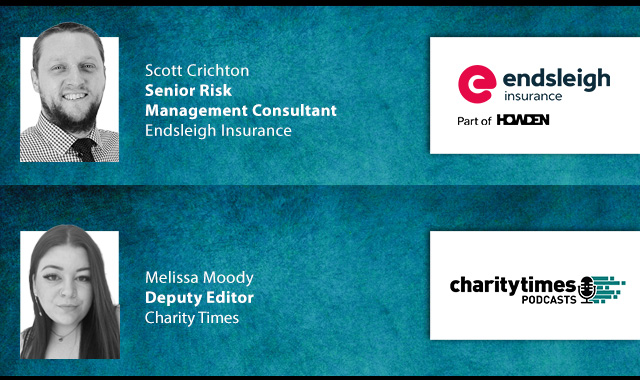
The cost-of-living crisis is impacting charities in a number of ways, including the risks they take. Endsleigh Insurance’s* senior risk management consultant Scott Crichton joins Charity Times to discuss the ramifications of prioritising certain types of risk over others, the financial implications risk can have if not managed properly, and tips for charities to help manage those risks.
* Coming soon… Howden, the new name for Endsleigh.
* Coming soon… Howden, the new name for Endsleigh.
Better Society




© 2021 Perspective Publishing Privacy & Cookies
Recent Stories