The Cabinet Office has issued an update to its recently published Procurement Pledge, which established a set of principles about how government will procure services with a range of providers.
The Pledge, which is for central government and public sector bodies to sign up to, outlines five key commitments that public sector signatories must meet.
When initially published in May, the pledge was met with concerns about the lack of reference to the role of the voluntary sector as potential provider of services on behalf of government.
Concerns were also raised about it not mentioning the Compact – the partnership agreement between government and the voluntary sector, which commits both to a series of undertakings (including procurement), and which all government departments are committed to following.
Subsequent efforts from Compact Voice to amend the text accompanying the pledge and ensure it clearly relates to the voluntary and community sector have resulted in government adding a section, which provides clarification:
What the Procurement Pledge means for civil society organisations
Government is strongly committed to the principles of the Compact between the Coalition and civil society organisations, drawn up in December 2010.
The Compact sets out undertakings for both on a range of topics, including procurement and every government body is expected to continue to maintain these undertakings.
Government recognises the potential possible contribution of a wide range of providers, including the voluntary and community sector and social enterprises, to meaningfully contribute to improving the design and delivery of services, and provide social as well as economic value.
The commitments set out in the Procurement Pledge will make public procurement more accessible to civil society organisations looking to be involved in the design and/or delivery of public goods and services and will help to successfully implement the procurement related principles of the Compact.
Simon Blake OBE, chair of Compact Voice, said: “We are delighted that the government’s commitment to Compact principles has now been explicitly linked to the Procurement Pledge.
"These changes also clarify the important role of the voluntary sector, which is a key player in the potential provision of services.
"While it is disappointing that the sector was not clearly mentioned from the outset, we welcome the changes that Cabinet Office has made to the Pledge. This also highlights the effectiveness of the partnership between Compact Voice and the Cabinet Office.”
The Procurement Pledge can be read in full on the Cabinet Office website.


Latest News
-
Criticism of senior MP’s 'outdated' comparison of charity retail with ‘vape shops’
-
Working Families closes following ‘a sustained period of financial challenge’
-
Case study: How charities can best protect their storytellers
-
British Heart Foundation to close almost one in four of its charity shops
-
Monday movers - 8 June
-
Jobs at risk as RSPB looks to cut operating costs by 7%





Charity Times video Q&A: In conversation with Hilda Hayo, CEO of Dementia UK
Charity Times editor, Lauren Weymouth, is joined by Dementia UK CEO, Hilda Hayo to discuss why the charity receives such high workplace satisfaction results, what a positive working culture looks like and the importance of lived experience among staff. The pair talk about challenges facing the charity, the impact felt by the pandemic and how it's striving to overcome obstacles and continue to be a highly impactful organisation for anybody affected by dementia.
Charity Times Awards 2023
Mitigating risk and reducing claims
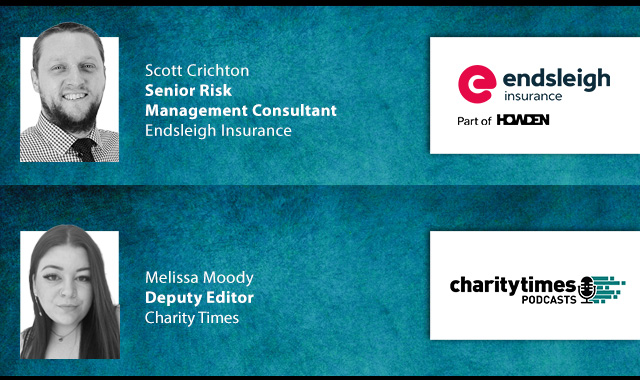
The cost-of-living crisis is impacting charities in a number of ways, including the risks they take. Endsleigh Insurance’s* senior risk management consultant Scott Crichton joins Charity Times to discuss the ramifications of prioritising certain types of risk over others, the financial implications risk can have if not managed properly, and tips for charities to help manage those risks.
* Coming soon… Howden, the new name for Endsleigh.
* Coming soon… Howden, the new name for Endsleigh.
Better Society




© 2021 Perspective Publishing Privacy & Cookies
Recent Stories