Human rights organisation Amnesty International has told workers based outside the UK they will no longer have the right to remain members of the UK-based Unite union.
As part of the same move, union members at the International Secretariat in London have been given three months to agree these new terms or face derecognition.
The announcement was made by the senior management at the Amnesty’s International Secretariat, the body that leads the global work of the organisation. In practice, this means that many of its staff based outside of London will have less protection when it comes to their labour rights.
The move would affect Amnesty staff in Beirut, Dakar, Paris, Moscow, Geneva, Hong Kong, Kampala, and New York.
Unite, which has represented Amnesty workers since 1973, has expressed their willingness to engage in discussions.
However, they warned they cannot enter discussions while Amnesty’s management is holding a 'gun to the heads of its staff members' by threatening them with derecognition of their union.
Unite Regional Officer, Alan Scott said: "The irony of a human rights organisation denying its own employees trade union recognition won’t be lost on governments hostile to the work of Amnesty."
Amnesty International secretary general Salil Shetty told staff that he would get a “second opinion” on representation for staff outside London.
He stressed that senior management are “fully behind the right of all staff to collective bargaining and union membership”.
Unite members are waiting to hear if this means the threat of derecognition will be lifted so that talks can begin.
In reply, Salil Shetty, Amnesty International’s Secretary General, commented: “We are fully behind the right of all staff to collective bargaining and union membership. This is equally true for staff that are based in London and outside.
"As I said to the Union, there is no doubt in my mind that Amnesty's greatest asset is our staff, volunteers and members, who have joined the movement because they want to protect human rights across the world.
"We provided a new draft collective bargaining agreement last Wednesday to be negotiated with the Union over the next three months. We look forward to having a clearer and better functioning relationship with the Union with this new agreement at the earliest.
"I strongly believe that it is the job of all of us in leadership positions in the International Secretariat to enable all staff to contribute fully to Amnesty’s goals.”


Latest News
-
Criticism of senior MP’s 'outdated' comparison of charity retail with ‘vape shops’
-
Working Families closes following ‘a sustained period of financial challenge’
-
Case study: How charities can best protect their storytellers
-
British Heart Foundation to close almost one in four of its charity shops
-
Monday movers - 8 June
-
Jobs at risk as RSPB looks to cut operating costs by 7%





Charity Times video Q&A: In conversation with Hilda Hayo, CEO of Dementia UK
Charity Times editor, Lauren Weymouth, is joined by Dementia UK CEO, Hilda Hayo to discuss why the charity receives such high workplace satisfaction results, what a positive working culture looks like and the importance of lived experience among staff. The pair talk about challenges facing the charity, the impact felt by the pandemic and how it's striving to overcome obstacles and continue to be a highly impactful organisation for anybody affected by dementia.
Charity Times Awards 2023
Mitigating risk and reducing claims
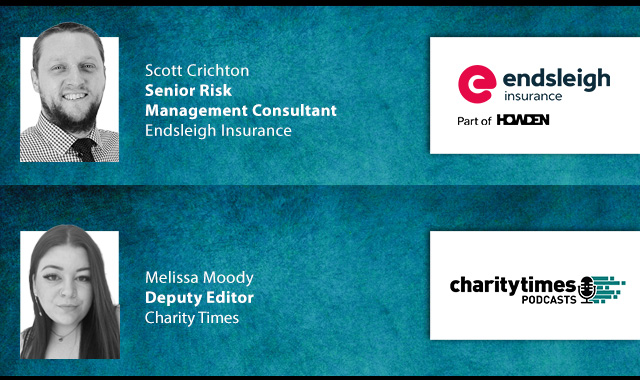
The cost-of-living crisis is impacting charities in a number of ways, including the risks they take. Endsleigh Insurance’s* senior risk management consultant Scott Crichton joins Charity Times to discuss the ramifications of prioritising certain types of risk over others, the financial implications risk can have if not managed properly, and tips for charities to help manage those risks.
* Coming soon… Howden, the new name for Endsleigh.
* Coming soon… Howden, the new name for Endsleigh.
Better Society





© 2021 Perspective Publishing Privacy & Cookies
Recent Stories