Amnesty International has appointed Salil Shetty as its next secretary general.
Shetty, an Indian national, has been the director of the United Nations' Millennium Campaign for the past six years and the chief executive of international anti-poverty NGO ActionAid before then.
Chair of Amnesty's International executive committee, Peter Pack said: "We are thrilled that Salil will be joining us and leading Amnesty International as we renew our fight to end injustice - campaigning with those imprisoned because of their ideas, those on death row, those being tortured, and those who have their rights denied because they live in poverty.
"As we approach our 50th anniversary, we have ambitious plans to expand our work, especially in the global south, and Salil has a solid track record in mobilising people, civil society, governments and international organisations in the fight for people's rights and dignity. He's absolutely the right person to take Amnesty International into the next stage of our work."
Salil Shetty said: "I feel privileged to be given this amazing opportunity at a time when the world needs human rights for all more than ever before."
Salil Shetty will start in June 2010.
He succeeds Irene Khan who steps down after eight years as Amnesty International's secretary general on 31December 2009.
Salil Shetty Biography
Current role
Director, United Nations Millennium Campaign, New York, September 2003 - present
The UN Millennium Campaign was set up by the United Nations Secretary General Kofi Annan to create the political will required internationally for the realisation of the Millennium Development Goals (MDGs).
Previous roles
Chief Executive, ActionAid, London, July 1998-September 2003
In 2003, ActionAid was the third largest international development NGO in the UK and amongst the foremost poverty-eradication NGOs globally. Salil led the transformation of ActionAid into a recognised and respected global voice on poverty.
Director, ActionAid Kenya, Nairobi, July 1995-July 1998
Education
Salil Shetty holds a MSc (Econ) on Social Policy, Planning & Participation in Developing Countries from the London School of Economics (London, 1990-91), and an MBA from the Indian Institute of Management (Ahmedabad, 1981-83).


Latest News
-
Criticism of senior MP’s 'outdated' comparison of charity retail with ‘vape shops’
-
Working Families closes following ‘a sustained period of financial challenge’
-
Case study: How charities can best protect their storytellers
-
British Heart Foundation to close almost one in four of its charity shops
-
Monday movers - 8 June
-
Jobs at risk as RSPB looks to cut operating costs by 7%





Charity Times video Q&A: In conversation with Hilda Hayo, CEO of Dementia UK
Charity Times editor, Lauren Weymouth, is joined by Dementia UK CEO, Hilda Hayo to discuss why the charity receives such high workplace satisfaction results, what a positive working culture looks like and the importance of lived experience among staff. The pair talk about challenges facing the charity, the impact felt by the pandemic and how it's striving to overcome obstacles and continue to be a highly impactful organisation for anybody affected by dementia.
Charity Times Awards 2023
Mitigating risk and reducing claims
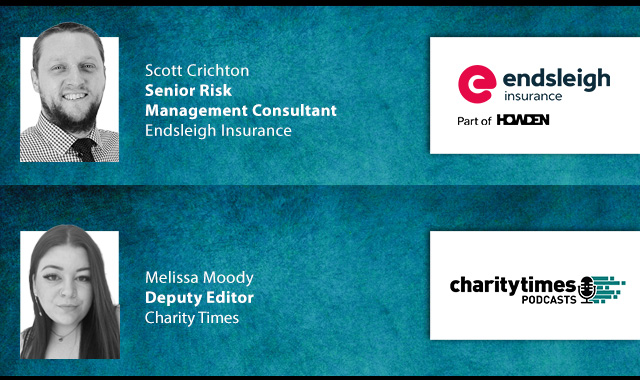
The cost-of-living crisis is impacting charities in a number of ways, including the risks they take. Endsleigh Insurance’s* senior risk management consultant Scott Crichton joins Charity Times to discuss the ramifications of prioritising certain types of risk over others, the financial implications risk can have if not managed properly, and tips for charities to help manage those risks.
* Coming soon… Howden, the new name for Endsleigh.
* Coming soon… Howden, the new name for Endsleigh.
Better Society




© 2021 Perspective Publishing Privacy & Cookies
Recent Stories